
Wisdom’s Gate

But in the light of God all wait, which will bring you to see where wisdom’s gate is; the fear of the Lord is the beginning of it. Pure wisdom is let out of the treasury into the pure heart, which sees God; and fearing the living God, it keeps the heart pure and clean, to receive the wisdom from the treasury freely, who doth not upbraid. And as ye depart from evil and iniquity, he breaks the bonds by showing mercy; and then the understanding grows pure and clear (Works, VII, 54).

On Fifth month, the 16th, nine people met to read and discuss Fox’s Epistle 44. In this epistle, written in 1653, Fox calls Friends to wait for the power to unify them into one spiritual body. Our discussion begins at 3:58 in the recording and centers on the distinct, significant change that occurs in man as he is given the light of Christ, and thereby enabled to “walk in newness of life” (Rom. 6:4). Discussion on the meaning of the phrase “baptizes into one body” (53) follows, starting at 13:36. The conversation then moves into the topic of our tradition’s increasingly refined standards of righteousness, which direct us toward the mind of Christ, the wisdom of God. The final standard and beginning of wisdom has been found to be the fear the Lord (starting at 22:38). A passage from Penington is read at 36:55:

The pure fear, the holy fear, the heavenly fear, which is of a clean and heavenly nature, and endureth for ever, is also in this seed. The child-like fear is in the nature of the child; and the more it grows in the true child-like nature, the more it grows in this kindly fear, wherein there is no torment, but the pure pleasure of life, and of holy obedience to the Father of life. The child-like fear is a promise of the new covenant; and given to the children of the new covenant, by virtue of the new covenant; God putting it into their hearts from the seed of life springing up in them, which preserves them from departing from the Lord (Works, IV, 343).

At 45:10 there is a moving personal testimony on the ordinary moments in which the Lord manifests himself to us through his mercy and love, allowing us to grow in heavenly wisdom. This lovely passage will hearten anyone who loves the light of Truth and delights to see it prosper!

Penington writes:

“Wisdom is justified of her children.” He that knows not the principle of the eternal light, who is not born of it . . . he cannot justify it in his paths; but he justifies the earthly wisdom and reason of man, by its setting up appearances of good, instead of good, and would make all acknowledge and bow to them as good; whereas that which is indeed acquainted with the good, living in the principle thereof, cannot bow to the false appearance, but only to the truth itself. When man’s spirit and wisdom is wearied out of all its paths, and he broken with the misery which will certainly overtake him therein; at last the path of God will be welcome to him, and that principle which, through the operation of God, is able to rectify him and make him happy (Works, II, 197).   

The recording has been edited to reduce silence between speakers.
I

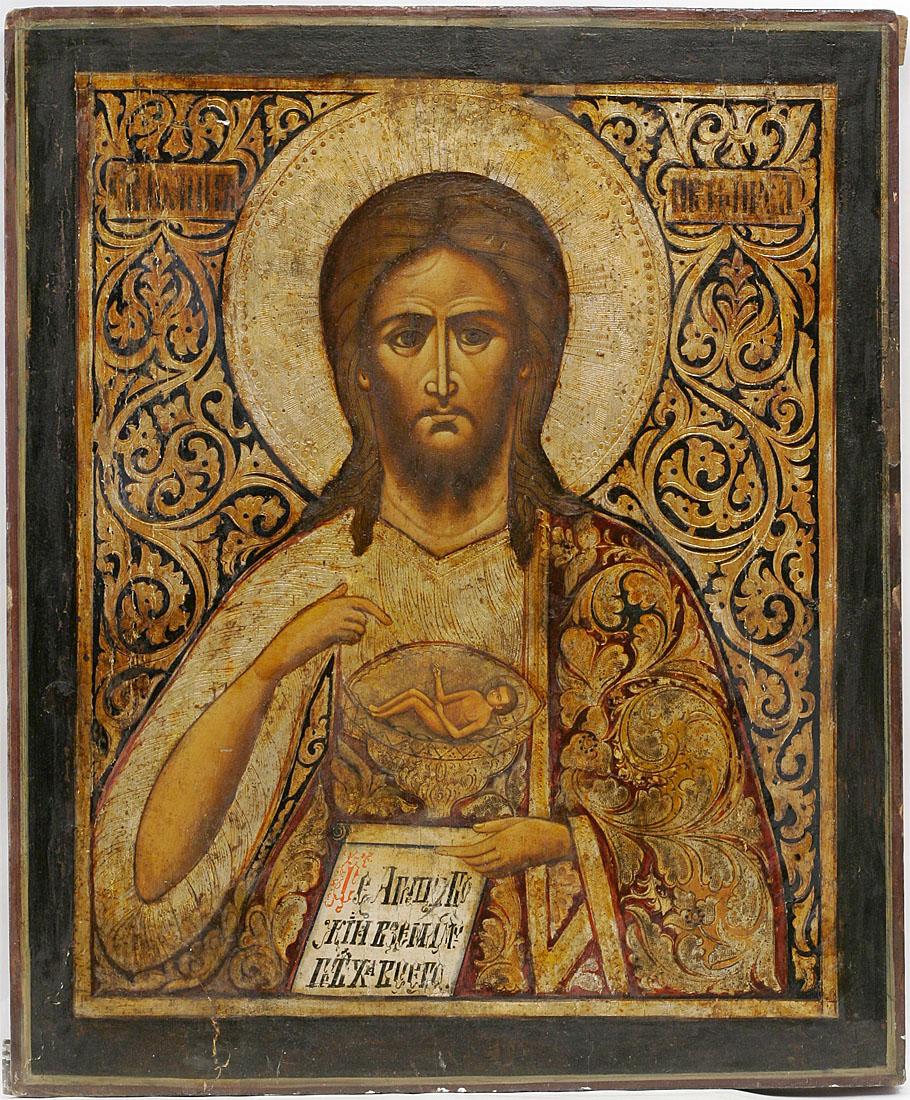
Icon of Christ as Holy Wisdom

Point to the Kingdom

Our monthly study of George Fox’s journal took place on the morning of the 8th of Fifth month. Eight were present, and we began by reading volume 1, pages 389-391 in The Works of George Fox (1831 edition). The material covered comprised two sections: the first featuring an epistle in which Fox cautions Friends “to keep out of the powers of the earth” (389) and “fight for [the kingdom] with spiritual weapons . . . and set up as many as ye can with these weapons” (390); in the second segment, Fox tells of a large meeting in Norwich in which a priest accused him of blasphemy (390). Fox responded:

Then said I, all people take notice, [the priest] said this was error and blasphemy in me to say these words; and now he hath confessed it is no more than the holy men of God in former times witnessed. So I showed the people, that as the holy men of God, who gave forth the scriptures, were moved by the holy ghost, did hear and learn of God, before they spake them forth, so must they all hearken and hear what the spirit saith, which will lead them into all truth, that they may know God and Christ, and may understand the scriptures (391).

Our discussion begins at 9:02 in the recording with responses to Fox’s epistle. The peace one seeks to secure through outward strife is instead to be found within: in Christ where relief from conflict is instantaneously afforded. Christ does “real things” witnessed one participant (found at 36:45 in the recording). The power of fear to influence behavior was acknowledged (beginning at 24:47) and wove throughout a number of comments, including reference to fear’s unconscious expression: aggression. Likewise, “conformity” was identified as another refuge taken in fear.

In the last third of our conversation, we threshed whether or not armed force has a rightful place in society. All agreed that those who knew Christ Within are led to not use carnal weapons, yet some of us   realized destructive behavior must at times be forcefully contained, a position supported by early Friends’ acknowledgment of a legitimate use for the magistrate’s sword. They themselves engaged in the Lamb’s War, using spiritual weapons to turn people to the Spirit of God, where the occasion of war and the necessity of the magistrate’s sword had been superseded.

Following our discussion, I researched early Friends’ stance on “magistrates’ or people’s defending themselves against foreign invasions” and found their position confirmed the view offered in this discussion (at 52:34 and 1:03:07): namely, that society’s use of physical force to suppress the violent and evil-doers is necessary (“for this the present estate of things may and doth require”). At the same time, there must be a forward movement in society precipitated by those who know the inward Christ, “which the Lord hath already brought some into” (157). In the following excerpt taken from volume 2 of his Works, Penington holds forth the requirement to protect society from destruction through armed force, even while the spiritual work goes forward through those to whom the Lord has made Himself known, those who through speaking the Word and teaching the doctrines of faith are to lift and move society into “a better state. . . which nations are to expect and travel towards.” Here is the Penington passage:

I speak not this against any magistrates’ or people’s defending themselves against foreign invasions, or making use of the sword to suppress the violent and evil-doers within their borders (for this the present estate of things may and doth require, and a great blessing will attend the sword where it is borne uprightly to that end, and its use will be honorable; and while there is need of a sword, the Lord will not suffer that government, or those governors, to want fitting instruments under them for the managing thereof, to wait on him in his fear to have the edge of it rightly directed); but yet there is a better state, which the Lord hath already brought some into, and which nations are to expect and travel towards” (Penington, vol. 2, p. 157).

The recording has been edited to reduce pauses between speakers.

NFF Journal Study 5/8/21
The Crucifixion, 1515 Grunewald