
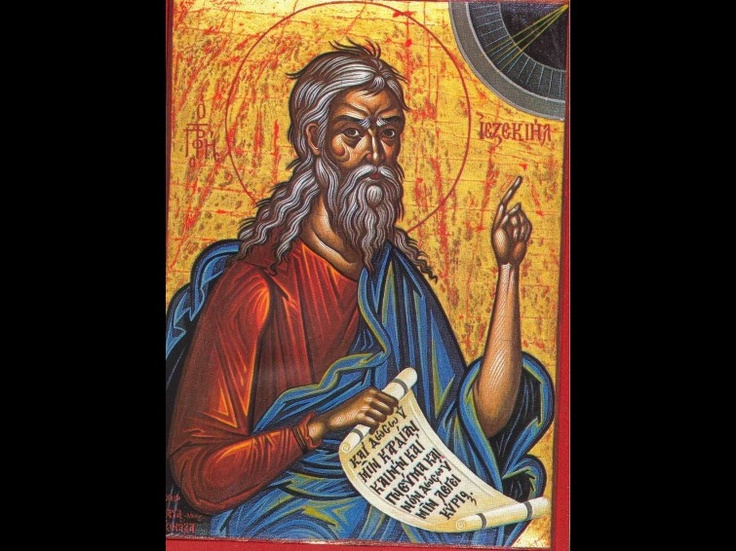
The following is my response to Evan Knappenberger’s writing, which can be found in part 1, posted yesterday on this blog. Our discussion pertained to chapter 36 in the book of Ezekiel in which two verses, 30 and 31, tie together God’s blessing of increased harvest and riddance of the heathens’ reproach with the Israelites coming awareness of shame. Our discussion is an attempt to understand this mixed blessing within the context of the forward movement of humanity towards salvation. We find affirmation in our Quaker tradition that being “led by the Holy Ghost into the truth and substance of the Scriptures” requires our “duly applying them to [our] own state[s]” (Nickalls, 31-32).
Patricia writes:
Thank you, Evan, for revisiting your ministry and going into your thoughts around “mixed blessing.” On First Day, I felt the importance of your words but wasn’t clear to respond. There are several ideas that I’m still struggling with and the act of writing will, I hope, allow me to clarify.
First, I’ll say that I agree with the idea that there’s a “mixed blessing” that is comprised of God’s plenitude and the self-awareness of shame. Shame is a topic that figures crucially into humanity’s restoration, and thus it shows up in the story of the garden with Adam hiding himself because he was naked (Gen. 3:10) and concludes with the “finisher of our faith ” who despised the shame of the cross (Heb. 12:2).
The passage in Ezekiel documents God’s correcting the people’s error that shame stems from the reproach of others (the “heathen” [KJV]) to a corrected understanding: that shame is the direct result of a broken relationship with God and the inevitable hiding from that truth [Gen. 3: 8–10] and that shame accompanies failed autonomy. The Ezekiel passage returns the source of shame from the social arena (which is worldly) to its true location where it is found in honest introspection, an inward facing of the truth of oneself. Verses 30 and 31 show the changeover from one to the other (italics mine):
And I will multiply the fruit of the tree, and the increase of the field, that ye shall receive no more reproach of famine among the heathen. Then shall ye remember your own evil ways, and your doings that were not good, and shall lothe yourselves in your own sight for your iniquities and for your abominations” (Eze. 36:30-31).
Shame arrived at through introspection—rather than outward reproach from the heathen—is a step forward in self-awareness, but the communal/tribal focus of this teaching that occurs in this chapter is not the end goal, and I think that the arguments God uses (I provide you with what you want [29-30]; I’m doing this to reveal my holiness [22]; and I will change you inwardly for the better [26]) conflates worldly goods with spiritual goods. As a result, the Israelites can learn to associate the unknown spiritual goods as being beneficial, as are the known worldly goods. The prophet’s teaching must raise humanity’s awareness until we are prepared individually to be restored to God: this further refinement in understanding—from communal to individual–must occur but doesn’t show up in this Ezekiel passage or largely in the Old Testament, while it instead features abundantly in the New Testament. Penington clearly states that the relationship that is now to be is not based in on the tribe/community but is personal, to be between God and the individual:
What is the New Covenant? It is a new agreement between God and the soul, different from the former agreement, which was between God and that people of the Jews (Works, 4:19).
In the Ezekiel chapter, God is teaching the people that His abundance and acknowledgement of shame go together, are inseparable. The abundance precedes shame in this passage; at a future time, however, the acknowledged shame will precede Grace, which is not available until we, individually, worship the truth by opening up to it, and that will entail shame. I think you’re in agreement with me about the primacy of the individual conscience, as you wrote the following words:
The human conscience is responsive to God’s call and is as varied in content as God’s voice to each person. The real shame is not in how we acquired our wealth, our land or whatever, but in how . . . we have put various idols—church, politics, belief —in place of the immediate conscientiousness demanded of us.
I’d say that this passage is about some rudimentary teaching that God is doing through Ezekiel, so the people learn that the inward state must be recognized and acknowledged. Outward goods, though important, are not the sum total of man’s concern. The required introspection exercises and strengthens the power of spiritual discernment, which will be necessary to see the light that shines in the darkness and enlightens every one that comes into the world.
 Abiding Quaker